Innovations in Metal Roofing Manufacturing
Technology, Automation, and Customization Trends
The metal roofing industry is entering a period of accelerated transformation, driven by advances in manufacturing technology, automation, sustainability demands, and the growing need for durable roofing solutions in harsh climates such as Quebec and Ontario. This white paper explores the latest innovations that are reshaping how metal roof systems are produced, installed, and customized for modern construction.
From automated roll-forming lines to high-performance protective coatings and digital optimization, manufacturers are adopting new methodologies to deliver precision, efficiency, and design freedom—while reducing environmental impact. As a result, metal roofing is becoming one of the fastest-growing roofing sectors in North America.
This report provides insight into how these technologies work, the benefits they offer, and why builders, contractors, and homeowners should expect metal roofing to dominate the market by 2030.

1. Automation in Metal Roofing Manufacturing


1.1 Advanced Roll-Forming Technology
Modern roll-forming machines have become the backbone of metal roofing production. Today’s automated systems offer:
- Computer-controlled precision for consistent panel thickness, profile, and seam integrity
- High output speeds, reducing manufacturing time
- Real-time quality monitoring with sensors and cameras
- Improved safety, reducing manual handling
Manufacturers such as Metal-Tech Production Inc. use fully automated lines capable of producing standing seam, metal shingles, and corrugated panels with unparalleled consistency.
Key Benefits
- Fewer defects
- Faster turnaround
- More stable pricing due to reduced labor demands
- Ability to produce on-demand custom lengths for large projects
1.2 Automated Coating and Finishing Systems
Protective coatings are crucial to a roof’s lifespan. New coil-coating technologies ensure that metal is uniformly finished and oven-cured for durability.
Advanced coating lines now offer:
- Multi-layered paint systems for weather resistance
- Infrared curing ovens to improve adhesion
- Automated varnish application for long-term color stability
- Eco-friendly coatings with reduced VOCs
These advancements help metal roofs maintain their appearance for decades—even under Quebec’s harsh UV exposure, snow, and freezing temperatures.
1.3 Robotics in Manufacturing and Packaging
Robotic arms and automated packaging systems are increasingly common in modern roofing factories.
They provide:
- Accurate stacking and wrapping
- Consistent panel handling
- Reduced damage during transport
- Faster order preparation
This automation ensures clients receive defect-free products ready for installation.
2. New Materials and Coating Technologies


2.1 High-Performance Protective Coatings
The coatings applied to a metal roof are essential for resisting corrosion, maintaining color, and withstanding extreme weather patterns.
Today’s innovative coatings include:
- Polyester modified (PE) for vivid colors and flexibility
- Polyvinylidene fluoride (PVDF) for premium fade resistance
- Ceramic microsphere coatings for solar reflectivity
- Anti-corrosion zinc-aluminum-magnesium (ZAM) layers for maximum durability
These advanced materials ensure a metal roof can last 50 years or more, offering better long-term value than asphalt shingles.
2.2 Eco-Friendly Material Options
Sustainability is a growing priority for municipalities, architects, and homeowners.
New trends include:
- Recycled-content steel and aluminum
- Non-toxic coatings
- Reduced-waste manufacturing processes
- Panels designed for solar integration
Metal roofing now aligns with LEED, Net-Zero, and modern green-building standards.
3. Customization Trends in Modern Manufacturing

3.1 Expanded Color and Texture Options
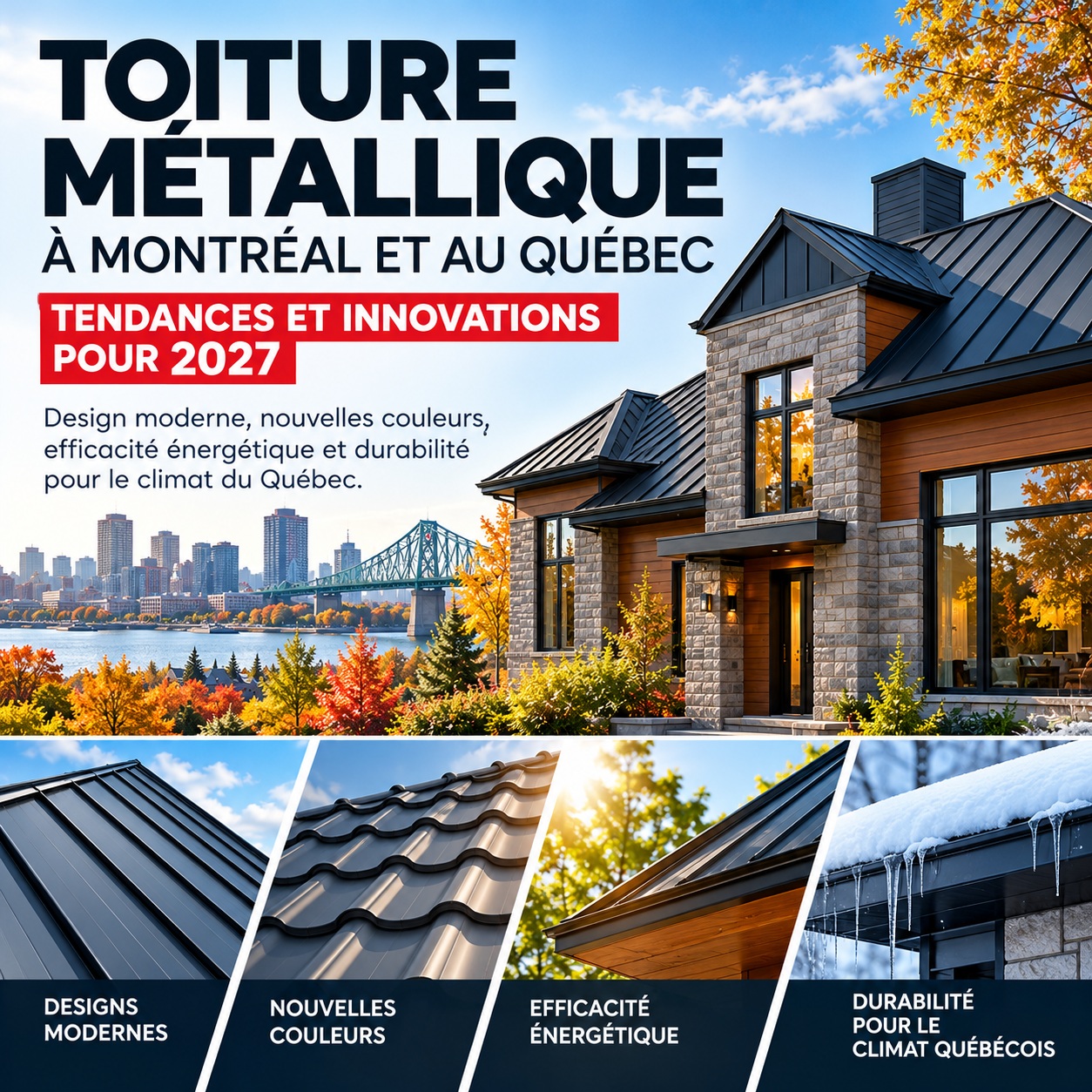
Modern finishing technologies allow manufacturers to produce metal roofs in hundreds of colors, textures, and gloss levels.
Popular 2025 trends include:
- Matte black, charcoal, and graphite grey
- Earth tones like mocha, terra cotta, and forest green
- Wood-grain effects for rustic homes
- Stone-coated finishes
Metal-Tech Production Inc. offers high-definition varnish finishes that retain color even in extreme climates.
3.2 Custom Panel Profiles
Manufacturers can now create an array of panel designs:
- Standing seam
- Corrugated
- Metal tiles
- Shingle profiles
- Snap-lock systems
- Custom rib configurations
This variety allows metal roofing to match nearly any architectural style—from modern minimalism to traditional chalets.
3.3 Precision Manufacturing for Unique Projects
Digital design systems let architects submit custom dimensions, which can be reproduced with millimeter accuracy.
Applications include:
- A-frame cabins
- Agricultural buildings
- Modern country houses
- Commercial storefronts
- Heritage building restoration
Custom bending, flashing design, and trim manufacturing enable a perfect fit for complex roof geometries.
4. Digitalization and Smart Manufacturing
4.1 CAD Integration and Digital Twins
Manufacturers increasingly use computer-aided design and 3D simulations to:
- Preview roofing systems
- Optimize panel dimensions
- Reduce material waste
- Improve installation accuracy
Digital twins also help installers foresee structural challenges before arriving onsite.
4.2 Smart Factory Systems (Industry 4.0)
Through IoT (Internet of Things) integration, modern factories can:
- Track performance of each machine
- Predict maintenance needs
- Monitor quality in real time
- Reduce downtime
This increases reliability and ensures consistently high-quality output.
4.3 Data-Driven Manufacturing
By collecting production data over time, manufacturers can optimize:
- Coil ordering
- Production schedules
- Color demand forecasting
- Inventory management
This reduces costs and ensures rapid delivery.
5. Improved Installation and On-Site Efficiency

5.1 Precision-Cut Panels Reduce Labor Costs
Factory-cut lengths mean installers spend less time measuring, cutting, and adjusting panels onsite.
Benefits:
- Reduced labor hours
- Less waste
- Improved safety
- Faster project completion
5.2 On-Site Roll-Forming for Large Projects
Some manufacturers provide mobile roll-forming units that produce panels directly on the job site.
Advantages:
- No limits on panel length
- Reduced transport damage
- Faster completion timelines
5.3 Better Compatibility with Modern Insulation Systems
Metal roofing now integrates seamlessly with:
- Rigid insulation panels
- Cold-climate underlayment
- Ventilation membranes
- Ice barrier systems
This improves energy efficiency and extends roof lifespan.
6. Sustainability and Environmental Trends

6.1 The Circular Economy Approach
Metal roofing supports a closed-loop manufacturing system since steel and aluminum are 100% recyclable.
6.2 Reduced Waste Processes
Automation reduces:
- Scrap metal
- Energy usage
- Defective product runs
6.3 Solar Compatibility
Standing seam roofs are ideal for solar panel installation—no drilling required.

The Future of Metal Roofing Manufacturing
The industry is moving toward a smarter, more efficient, and highly customizable future. With innovations in automation, coating technology, digital tools, and sustainability practices, metal roofing is becoming the top choice for both residential and commercial construction across Quebec and Ontario.
Manufacturers like Metal-Tech Production Inc. are at the forefront of this transformation, offering advanced production capabilities, eco-friendly materials, and precision engineering.
As the demand for durable, beautiful, and energy-efficient roofing continues to rise, these technological advancements will guide the industry into a new era of performance and reliability.
With our high-quality metal roof panels, we ensure durability and stability for your home,
backed by our trusted warranty. Let us be a part of your journey to a safer, more secure future.
– Owners and Team of Metal-Tech Production inc.